

Loke Bole Bole Re
How to Study This Lesson
- First, read the whole poem idea in Bangla.
- Then read each stanza with the line-by-line meaning.
- After that, read the Easy English explanation.
- Finally, try to say the Main Idea without looking at Bangla.
- Listen to the audio and read the lesson at the same time.
1. কবি পরিচিতি: Who was Hason Raja?
Hason Raja ১৮৫৪ সালে সিলেটের এক ধনী জমিদার পরিবারে জন্মগ্রহণ করেন। যৌবনে তিনি বিলাসী জীবনযাপন করতেন। তাঁর কাছে টাকা, আরাম ও আনন্দ—সবই ছিল।
কিন্তু জীবনের এক পর্যায়ে তিনি বুঝতে পারেন যে ধন-সম্পদ, ঘরবাড়ি ও বিলাসিতা স্থায়ী নয়। এগুলো একদিন শেষ হয়ে যায়। এরপর তিনি জীবন, মৃত্যু, স্রষ্টা, আত্মা এবং মানুষের প্রকৃত অবস্থান নিয়ে গভীরভাবে ভাবতে শুরু করেন।
তিনি অনেক গান লিখেছেন। তাঁর গানে জীবন, মৃত্যু, আধ্যাত্মিক ভাবনা, আল্লাহর প্রতি ভরসা এবং মানুষের অসহায়ত্বের কথা পাওয়া যায়। তিনি নিজেকে অনেক সময় “পাগলা হাসন রাজা” বলতেন।
2. কবিতাটি সম্পর্কে সহজ ধারণা
“Loke Bole Bole Re” একটি আধ্যাত্মিক ভাবনার কবিতা/গান। এখানে কবি নিজের ঘর নিয়ে মানুষের কথার উত্তর দিচ্ছেন। মানুষ বলে তাঁর ঘর ভালো নয়। কিন্তু কবি বলেন, এই পৃথিবীতে মানুষ আসলে স্থায়ী ঘর বানাতে পারে না, কারণ মানুষের জীবনই স্থায়ী নয়।
এই কবিতায় ঘর শুধু বাড়ি নয়। এটি মানুষের পার্থিব জীবন, ধন-সম্পদ, দেহ, অবস্থান এবং অহংকারের প্রতীক। কবি বুঝতে পেরেছেন—জীবন ক্ষণস্থায়ী, মৃত্যু নিশ্চিত, আর সবকিছু আল্লাহর হাতে।
Easy English
“Loke Bole Bole Re” is a spiritual poem or song. In this poem, the poet speaks about his house. People say that his house is not good. But the poet understands that no house in this world is permanent because human life is not permanent.
Here, the house is not only a building. It is also a symbol of worldly life, wealth, the body, status, and pride. The poet realizes that life is short, death is certain, and everything depends on Allah.
3. Main Lesson Goal
এই পাঠে তুমি শুধু বাংলা অনুবাদ মুখস্থ করবে না। আগে কবিতার মূল ভাব বুঝবে, তারপর লাইন ধরে অর্থ বুঝবে, তারপর সহজ English meaning পড়বে। শেষে তুমি চেষ্টা করবে সহজ English-এ কবিতার ভাব বলতে।
4. Whole Poem in Very Easy Bangla
এই কবিতায় মানুষ হাসন রাজাকে বলে—
“তোমার ঘর ভালো নয়।”
হাসন রাজা উত্তর দেন—
“আমি কী দিয়ে ঘর বানাব? আমার হাতে তো কিছুই নেই।”
তিনি ভাবেন—
“আমি যদি বড় ঘর বানাইও, সেখানে কতদিন থাকব? জীবন তো খুব ছোট। আমার চুল পেকে গেছে। বার্ধক্য এসে গেছে। মৃত্যু কাছে।”
তাই তিনি বুঝতে পারেন—
এই পৃথিবীর ঘরবাড়ি, ধন-সম্পদ ও সাজসজ্জা স্থায়ী নয়। মানুষ জানে না সে কতদিন বাঁচবে। মৃত্যুর পর আল্লাহ তাকে কোথায় রাখবেন—এই ভাবনায় তিনি কাঁদেন।
Easy English
In this poem, people say to Hason Raja:
“Your house is not good.”
Hason Raja answers:
“What can I build with nothing?”
He thinks:
“Even if I build a good house, how long will I live in it? Life is short. My hair is turning grey. Old age has come. Death is near.”
So, he understands that houses, wealth, and decoration in this world are not permanent. Human beings do not know how long they will live. He thinks about death and Allah, and he becomes humble.
Stanza-wise Lesson
Stanza 1: People Judge from Outside
মানুষ বাইরের দিক দেখে বিচার করে
Important Words
Word / Phrase Easy Meaning Bangla
they say people say লোকে বলে
house home / worldly life ঘর / পার্থিব জীবন
no good not good ভালো নয়
build make / construct তৈরি করা
nothing no real power or possession কিছুই নেই
here in this world এই পৃথিবীতে
Line by Line Easy Meaning
Oh, they say my house is no good
= লোকে বলে, আমার ঘর ভালো নয়।
But what can I build with nothing here?
= কিন্তু এখানে আমার হাতে যখন কিছুই নেই, তখন আমি কী দিয়ে ঘর বানাব?
সহজ কথা:
মানুষ বাইরের দিক থেকে বিচার করে। কিন্তু কবি বুঝেছেন, মানুষের নিজের কোনো প্রকৃত ক্ষমতা নেই। সবকিছু আল্লাহর হাতে।
Easy English:
People judge Hason Raja from the outside. They say that his house is not good. But he feels that human beings are helpless before Allah.
Stanza 2: Life Is Short
জীবন খুব ছোট
Important Words
Word / Phrase Easy Meaning Bangla
erect build নির্মাণ করা
home house / worldly life ঘর
how long for how many days কতদিন
stay live / remain থাকা
truly really সত্যিই
Line by Line Easy Meaning
I’ll erect a home
= আমি ভালো করে একটি ঘর বানাব।
Yet how long will I truly stay?
= কিন্তু আমি সত্যিই সেখানে আর কতদিন থাকব?
সহজ কথা:
মানুষ বড় ঘর বানালেও সেখানে চিরদিন থাকতে পারে না।
জীবন খুব ছোট।
মৃত্যু যেকোনো সময় আসতে পারে।
Easy English:
The poet may build a good house.
But he will not live there forever.
Life is short, and death can come at any time.
Stanza 3: Grey Hair and Old Age
পাকা চুল ও বার্ধক্য
Important Words
Word / Phrase Easy Meaning Bangla
gaze look carefully তাকিয়ে দেখা
mirror glass that shows your face আয়না
noticing seeing / realizing লক্ষ্য করা
strands thin lines / pieces গুচ্ছ / রেখা
grey hair old hair / sign of old age পাকা চুল
Line by Line Easy Meaning
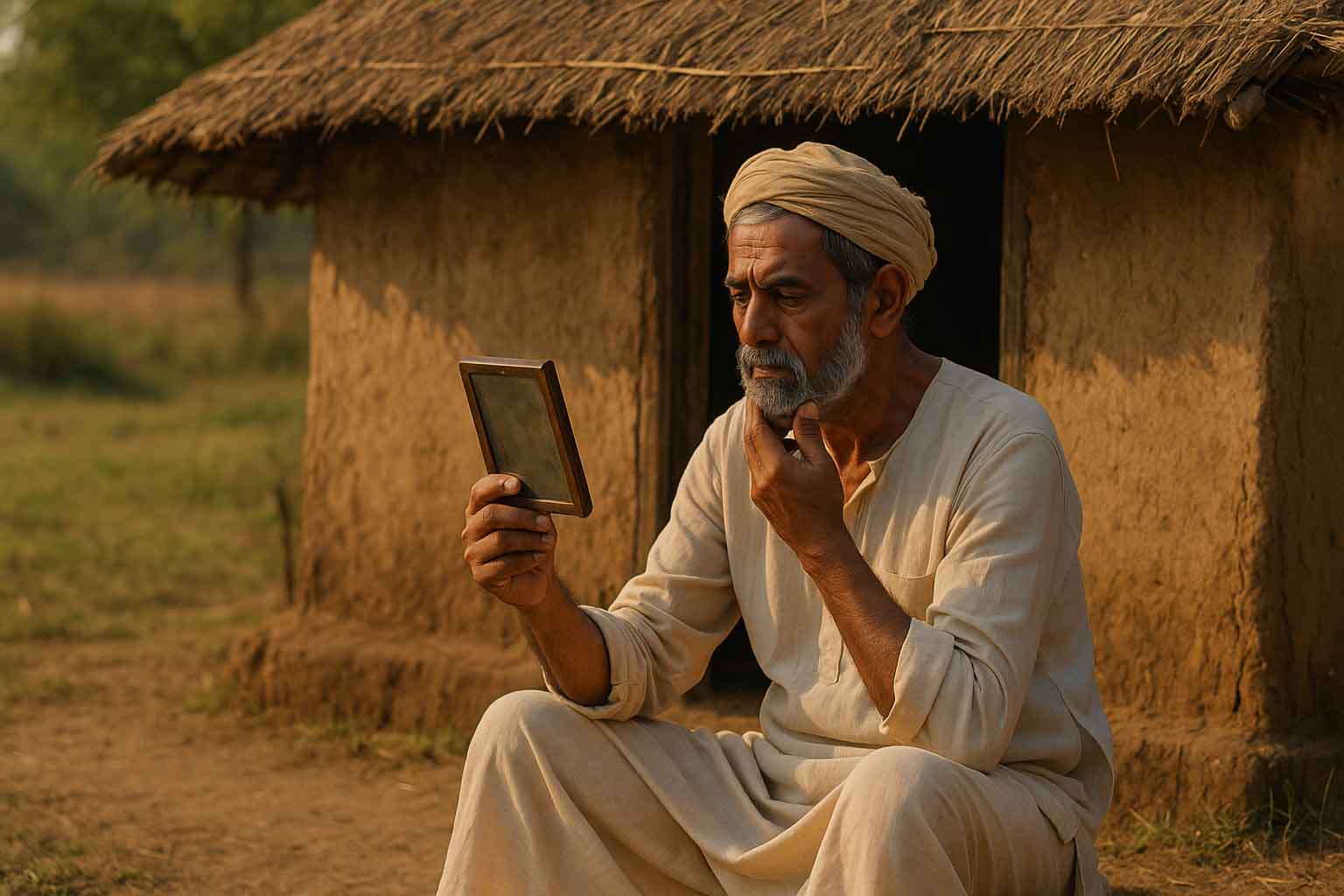
I gaze into the mirror
= আমি আয়নায় তাকিয়ে দেখি।
Noticing the strands of grey in my hair
= আমার চুল পেকে গেছে—এটি আমি দেখি।
সহজ কথা:
পাকা চুল দেখে কবি বুঝতে পারেন, সময় দ্রুত চলে যাচ্ছে। বার্ধক্য এসেছে। মৃত্যুও কাছে আসছে।
Easy English:
Grey hair reminds the poet of old age. He realizes that time is passing quickly. Old age has come, and death is near.
Stanza 4: No Permanent House in This World
এই পৃথিবীতে স্থায়ী ঘর নেই
Important Words
Word / Phrase Easy Meaning Bangla
thinking of this thinking about life and death এসব ভেবে
dwelling place to live বসতবাড়ি
never built did not build বানাননি
permanent lasting forever স্থায়ী
Line by Line Easy Meaning
Thinking of this
= এসব কথা ভেবে,
Hason Raja never built a dwelling
= হাসন রাজা আর স্থায়ী ঘর বানাতে চাননি।
সহজ কথা:
কবি বুঝেছেন, এই পৃথিবী স্থায়ী থাকার জায়গা নয়। তাই তিনি শুধু ঘরবাড়ি ও আরামের কথা ভাবেন না। তিনি জীবন, মৃত্যু, আত্মা ও আল্লাহর কথা ভাবেন।
Easy English:
The poet understands that this world is not a permanent home. He does not care only about houses and comfort. He thinks about life, death, the soul, and Allah.
Stanza 5: Fear of the Life After Death
মৃত্যুর পরের জীবনের ভাবনা
Important Words
| Word / Phrase | Easy Meaning | Bangla |
| Allah | the Creator | আল্লাহ |
| take him | keep him | তাকে নিয়ে রাখবেন |
| rest | peace / final place | বিশ্রাম / শান্তি |
| uncertainty | not know what will happen | অনিশ্চয়তা |
| tears | crying | কান্না / অশ্রু |
Line by Line Easy Meaning
Where will Allah take him? Where will he find rest?
= মৃত্যুর পর আল্লাহ তাকে কোথায় রাখবেন? সে কোথায় শান্তি পাবে?
This uncertainty brings him to tears
= এই অনিশ্চয়তার কথা ভেবে সে কাঁদে।
সহজ কথা:
কবি জানেন না মৃত্যুর পর আল্লাহ তাকে কোথায় রাখবেন। এই ভাবনা তাকে বিনয়ী করে। সে আল্লাহর সামনে নিজের অসহায়ত্ব বুঝতে পারে।
Easy English:
The poet thinks about life after death. He does not know where Allah will place him. This thought makes him humble and emotional.
Stanza 6: Life Is Uncertain
জীবন অনিশ্চিত
Important Words
| Word / Phrase | Easy Meaning | Bangla |
| known his days | known how long he would live | কতদিন বাঁচবে তা জানা |
| painted | coloured / decorated | রঙ করা |
| rooms | parts of a house | ঘর |
| vibrant hues | bright colours | উজ্জ্বল রঙ |
| uncertain | not sure | অনিশ্চিত |
Line by Line Easy Meaning
If only Hason Raja had known his days
= হাসন রাজা যদি জানতেন তিনি কতদিন বাঁচবেন,
He would have painted his rooms in vibrant hues
= তাহলে তিনি দালান-কোঠা সুন্দর রঙে সাজাতেন।
সহজ কথা:
মানুষ জানে না সে কতদিন বাঁচবে। জীবন অনিশ্চিত। তাই শুধু ঘরবাড়ি সাজানোই জীবনের আসল কাজ নয়।
Easy English:
Human beings do not know how long they will live. If the poet knew his time, he might decorate his house. But life is uncertain, so worldly decoration is not the real purpose of life.
Stanza 7: Repetition of the First Idea
প্রথম কথার পুনরাবৃত্তি
Important Words
| Word / Phrase | Easy Meaning | Bangla |
| repetition | saying again | পুনরাবৃত্তি |
| worldly judgment | people’s outside judgment | মানুষের বাহ্যিক বিচার |
| spiritual truth | truth about the soul and Allah | আধ্যাত্মিক সত্য |
| human limitation | human helplessness | মানুষের সীমাবদ্ধতা |
Line by Line Easy Meaning
Oh, they say my house is no good
= লোকে বলে, আমার ঘর ভালো নয়।
But what can I build with nothing here?
= কিন্তু এখানে আমার হাতে যখন কিছুই নেই, তখন আমি কী দিয়ে ঘর বানাব?
সহজ কথা:
শেষে কবি প্রথম কথাই আবার বলেন। এতে কবিতার মূল ভাব আরও জোরালো হয়। মানুষের বাহ্যিক বিচার গুরুত্বপূর্ণ নয়।
আসল কথা হলো—
জীবন ক্ষণস্থায়ী, মানুষ অসহায়, আর সবকিছু আল্লাহর হাতে।
Easy English:
At the end, the poet repeats the first idea. This makes the message stronger. People’s outside judgment is not important. Life is temporary, and everything depends on Allah.
Whole Poem: Very Easy Summary
এই কবিতায় মানুষ হাসন রাজাকে বলে যে তাঁর ঘর ভালো নয়। কিন্তু কবি বুঝতে পারেন, মানুষের হাতে আসলে কিছুই নেই। জীবন খুব ছোট, মৃত্যু নিশ্চিত, আর পৃথিবীর ঘরবাড়ি স্থায়ী নয়।
কবি আয়নায় নিজের পাকা চুল দেখে বার্ধক্য ও মৃত্যুর কথা ভাবেন। তিনি জানেন না মৃত্যুর পর আল্লাহ তাকে কোথায় রাখবেন। এই ভাবনায় তিনি কাঁদেন।
কবি বুঝিয়ে দেন—মানুষের উচিত শুধু ঘরবাড়ি, সম্পদ ও বাহ্যিক সাজসজ্জা নিয়ে ব্যস্ত না থাকা। মানুষের উচিত জীবন, মৃত্যু, আত্মা, আল্লাহ এবং মৃত্যুর পরের জীবনের কথা ভাবা।
Easy English
In this poem, people say that Hason Raja’s house is not good. But the poet understands that human beings have nothing real in their hands. Life is short, death is certain, and worldly houses are not permanent.
The poet sees his grey hair in the mirror and thinks about old age and death. He does not know where Allah will place him after death. This thought makes him cry.
The poet teaches us that we should not be busy only with houses, wealth, and outward decoration. We should think about life, death, the soul, Allah, and the life after death.
Main Message of the Poem
এই কবিতার মূল শিক্ষা হলো—মানুষের জীবন ক্ষণস্থায়ী। ঘরবাড়ি, ধন-সম্পদ ও বাহ্যিক সৌন্দর্য স্থায়ী নয়। তাই মানুষের উচিত অহংকার না করে বিনয়ী হওয়া এবং আল্লাহ, আত্মা ও মৃত্যুর পরের জীবনের কথা ভাবা।
Easy English
The main message of the poem is that human life is temporary. Houses, wealth, and outward beauty are not permanent. So, people should not be proud. They should be humble and think about Allah, the soul, and the life after death.
For Exam Preparation
1. Central theme:
The central theme of the poem is the temporary nature of human life. Hason Raja realizes that worldly houses and possessions are not permanent because no one knows how long he will live.
2. Message of the poem:
The poem gives the message that human life is uncertain and short. So, people should not be too proud of worldly possessions and should think about their final destination.
3. “My house is no good”:
The line means that people criticize Hason Raja’s house as poor or imperfect. But the deeper meaning is that worldly life itself is temporary and incomplete.
4. “What can I build with nothing here?”:
This line shows Hason Raja’s helplessness. He feels that everything in this world is temporary, so building a permanent home here is not really possible.
5. Desire to build a home:
Hason Raja says that he will build a home. But at the same time, he wonders how long he will actually stay in it.
6. Temporary life:
The poem shows that human life is temporary through Hason Raja’s doubt about how long he will stay. His grey hair also reminds him that old age and death are near.
7. Looking into the mirror:
Hason Raja looks into the mirror and notices grey strands in his hair. This makes him think about old age, death and the shortness of life.
8. Grey hair:
The grey strands of hair symbolize old age and the passing of time. They remind Hason Raja that his life is moving towards its end.
9. Not building a dwelling:
Hason Raja never built a dwelling because he realized that his stay in this world was uncertain. He did not want to be deeply attached to a temporary home.
10. Spiritual anxiety:
The poem expresses spiritual anxiety through Hason Raja’s question, “Where will Allah take him?” He is worried about his final destination after death.
11. Tears of uncertainty:
The uncertainty about where Allah will take him and where he will find rest brings Hason Raja to tears. It shows his deep spiritual fear and sadness.
12. “Where will he find rest?”:
This question means that Hason Raja is uncertain about his final peace after death. He is thinking about the afterlife and Allah’s judgement.
13. If he had known his days:
If Hason Raja had known how long he would live, he would have decorated his rooms in bright colours. This shows his regret and his awareness of life’s uncertainty.
14. Worldly possessions:
The poem teaches us not to be too attached to worldly possessions. A house, decoration and comfort are meaningless if life itself is uncertain and temporary.
15. Lesson from the poem:
The poem teaches us to remember death and think about our spiritual life. It also teaches that worldly life is short, uncertain and not worth excessive attachment.
Most Probable Questions & Answers
1. What is the central theme of the poem “Oh, They Say”?
The central theme of the poem is that human life is not certain. It also shows that worldly things are not permanent.
2. What message does Hason Raja convey through the poem “Oh, They Say”?
Hason Raja says that human life is short and not certain. So, we should not love houses and worldly things too much.
3. Why do people say that Hason Raja’s house is no good?
People say that Hason Raja’s house is no good because it is not beautiful or strong. They think his house is poor and simple.
4. What does the speaker mean by “my house is no good”?
The speaker means that his house is not good in people’s eyes. He may also mean that this worldly house is not permanent.
5. Why does the speaker say, “But what can I build with nothing here?”
The speaker says this because he feels helpless. He thinks he has nothing permanent in this world.
6. What does Hason Raja want to build in the poem?
Hason Raja wants to build a home. But he is not sure how long he will stay in it.
7. Why does Hason Raja doubt how long he will stay in his house?
Hason Raja knows that life is not certain. He may die any time, so he is not sure how long he will stay in his house.
8. How does the poem show that human life is temporary?
The poem shows that Hason Raja has grey hair. It reminds him of old age and death.
9. Why does Hason Raja look into the mirror?
Hason Raja looks into the mirror and sees grey hair. This makes him think about old age and death.
10. What do the grey strands of hair symbolize in the poem?
The grey strands of hair symbolize old age. They also show that life is passing away.
11. Why did Hason Raja never build a dwelling?
Hason Raja never built a dwelling because he thought life was not certain. He did not know how long he would live.
12. What thought brings Hason Raja to tears?
The thought of his unknown future brings him to tears. He does not know where Allah will take him after death.
13. What does the line “Where will Allah take him?” suggest?
This line suggests Hason Raja’s worry about life after death. He depends on Allah for his final place.
14. How does the poem express Hason Raja’s spiritual anxiety?
The poem shows that Hason Raja is worried about his future after death. He asks where Allah will take him and where he will find rest.
15. What would Hason Raja have done if he had known his days?
If Hason Raja had known how long he would live, he would have decorated his rooms. He would have painted them in bright colours.
16. How does the poem teach us not to be too attached to worldly possessions?
The poem shows that houses and worldly things are not permanent. Life is not certain, so we should not love these things too much.
17. How does the poem reflect Hason Raja’s religious belief?
The poem shows that Hason Raja believes in Allah. He thinks that Allah controls his final place after death.
18. What lesson can you learn from the poem “Oh, They Say”?
We learn that life is short and not certain. We should remember Allah and should not be too proud of worldly things.